Laboratory Methods4 min read
Peptide Adsorption to Labware and How to Investigate Recovery Loss
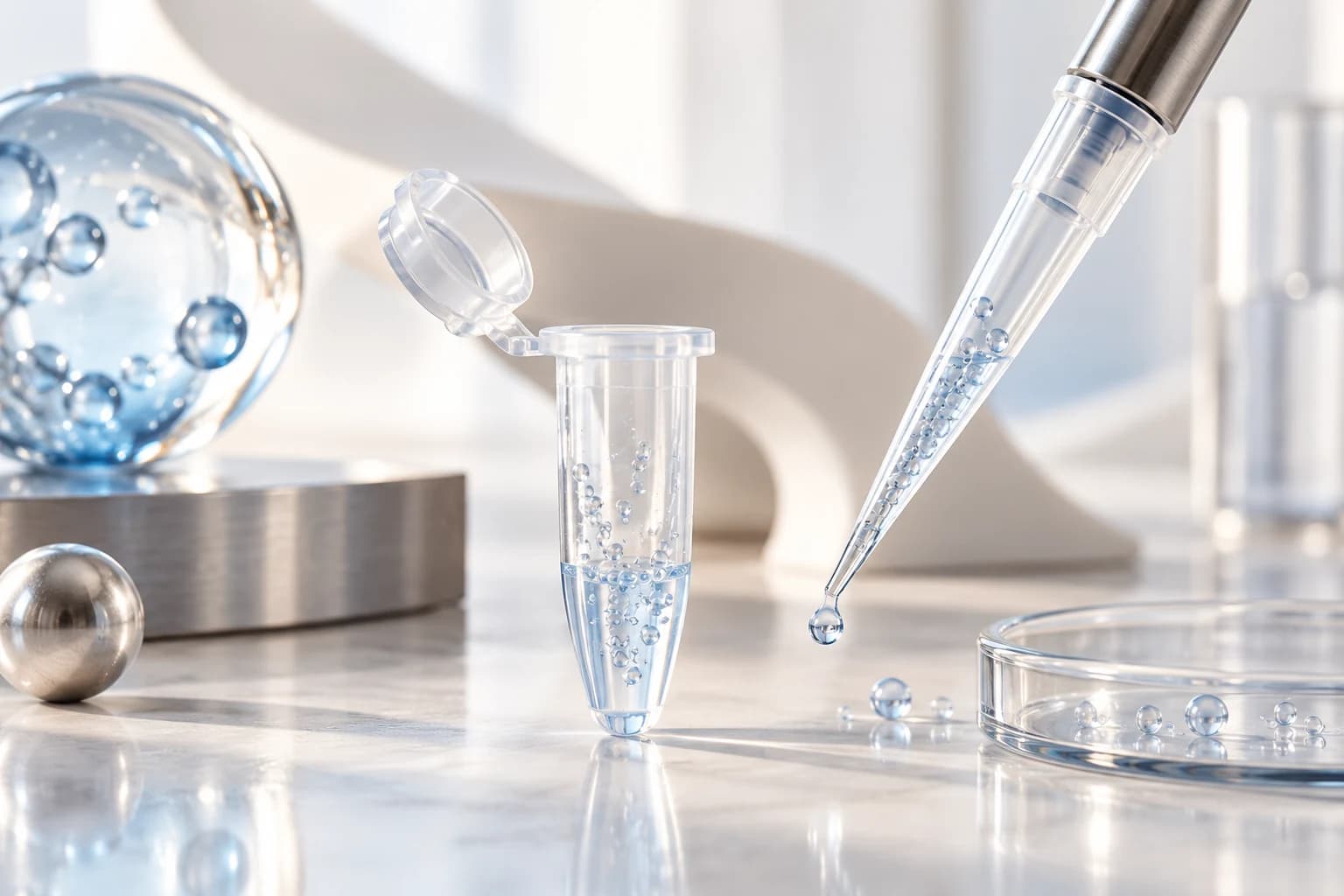
Peptide adsorption occurs when material associates with a surface, reducing the amount remaining in solution. In a laboratory workflow, the relevant surfaces can include tubes, pipette tips, sample vials, and assay plates. A lower measured response may therefore reflect sample recovery as well as the process being studied.
Peptide adsorption occurs when material associates with a surface, reducing the amount remaining in solution. In a laboratory workflow, the relevant surfaces can include tubes, pipette tips, sample vials, and assay plates. A lower measured response may therefore reflect sample recovery as well as the process being studied.
The practical question is whether the actual handling path preserves enough material for the intended measurement. A label such as low binding can help identify candidates for evaluation, but performance needs to be checked with the peptide and conditions used in the laboratory.
Map every surface the sample contacts
Start with the complete route from the initial preparation to the final measurement. List each transfer, container type, contact time, and approximate fill level. Include temporary steps such as waiting in an autosampler or holding a diluted sample before a plate is ready.
This map can reveal a comparison that is not as controlled as it appears. If one sample passes through three containers and another passes through one, a difference in measured recovery cannot automatically be assigned to the final container.
Experimental research on several model peptides found that labware performance depended on the material being tested; a more expensive low-binding product was not consistently the best option. That observation supports evaluating the full workflow rather than selecting a surface by marketing description alone.
Compare one handling variable at a time
A useful recovery investigation starts with a common preparation and a defined comparison. Keep the measurement method, timing, and other handling steps consistent while assessing the variable of interest.
For example, a laboratory could compare two container types while keeping the number of transfers unchanged. A separate experiment could then assess the effect of an extra transfer. Combining both changes immediately would make the result harder to explain.
Use an appropriate reference condition and blanks. Decide how recovery will be calculated and what level of difference matters to the intended method. These are experimental choices that should be justified for the assay rather than borrowed as universal acceptance limits.
Consider concentration and contact time
An acceptable result at one sample concentration does not establish acceptable recovery throughout the working range. The relationship between available material and exposed surface changes across preparations. A short contact test also does not establish performance after a long delay.
Research using low-quantity peptide samples documents material- and buffer-dependent adsorption effects. The finding is a reason to include relevant conditions in qualification; it does not establish a loss percentage for an unrelated research peptide.
Choose comparison points that represent the intended workflow, including realistic delays. Record the actual elapsed times. If a handling change improves one condition but worsens another, preserve both results rather than reporting only the favorable case.
Separate surface loss from analytical variation
A lower instrument signal can also arise from preparation error, matrix effects, degradation, or instrument behavior. Build controls that help distinguish these explanations. An analytical method used to assess recovery must itself be suitable for the sample matrix and concentration range.
If changing a container also changes the buffer or additive, the comparison no longer isolates the surface. Added components may affect the downstream assay. Any proposed improvement needs a second check showing that it does not introduce a different interference.
Keep raw measurements and preparation records together. A recovery result is much easier to interpret when the reviewer can trace the sample through every step.
Document the qualified handling path
Once the laboratory selects a workflow, record the specific consumables and the conditions supported by the evaluation. Reassess material changes that could affect the result, such as a different plate surface or a substantially longer holding period.
For purchasing, obtain the material information needed to design that evaluation. The peptide specifications guide can help organize the request. Contact Peptide Wholesale Supply for available product documentation; laboratory recovery studies remain specific to the method and equipment used.
Continue reading
Explore related research guides: Peptide Aggregation in In Vitro Assays and How to Evaluate Artifacts; Matrix Effects in Peptide LCMS Quantification.
For in vitro laboratory research use only. Not for human or animal use or consumption. Not for diagnostic or therapeutic use.