Research Business Operations4 min read
Barcode Checks for Research Peptide Fulfillment
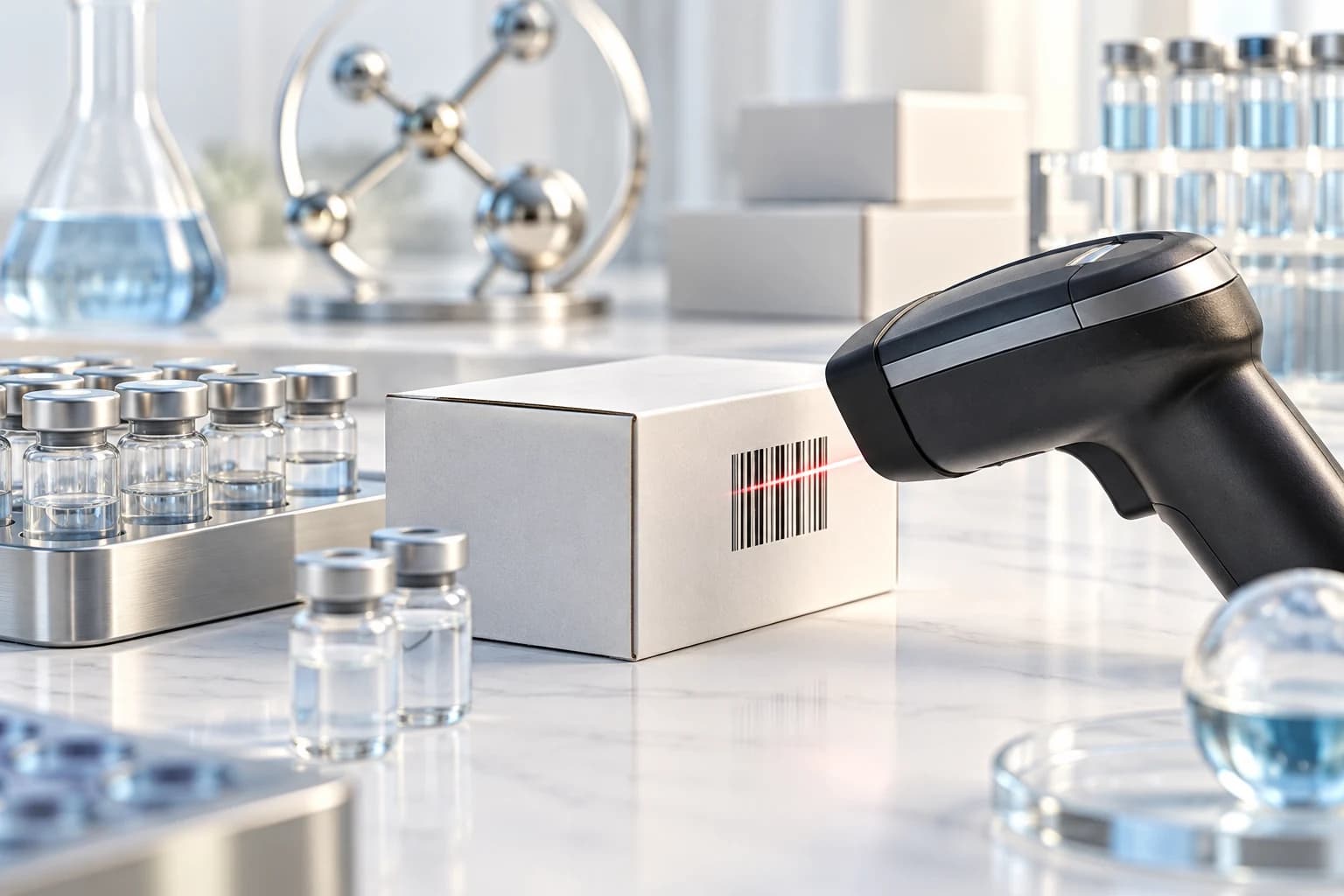
Barcode checks can help a research peptide fulfillment workflow detect a mismatch before an order leaves the warehouse. Their value depends on what the system does after reading the code. A scanner that successfully reads the wrong item has demonstrated readability, not order accuracy.
Barcode checks can help a research peptide fulfillment workflow detect a mismatch before an order leaves the warehouse. Their value depends on what the system does after reading the code. A scanner that successfully reads the wrong item has demonstrated readability, not order accuracy.
Design the check around the decision it supports. The receiving, picking, packing, and shipment steps may need different information, and each step should have a defined response when that information does not match expectations.
State what each scan is meant to verify
A product scan may identify a catalog option. A package-level scan may identify a Kit or case. A shipment-related scan may connect the physical material to a more specific record. Do not assume that one code carries all of these meanings.
Write down the expected data at each step and the system record used for comparison. Keep a readable fallback identifier on the relevant packaging where appropriate so staff can investigate a scan failure without guessing from appearance.
If a workflow uses GS1 identifiers, follow the applicable standards and allocation rules. A locally generated code should not be presented as a valid GS1 identifier merely because it has a similar appearance.
Separate readability from formal verification
A successful scan on one device does not establish consistent barcode quality across equipment and conditions. GS1's barcode quality guidance describes the use of appropriate barcode verifiers to measure printed quality.
Operational scan testing and formal verification therefore answer different questions. The first tests the intended workflow; the second assesses symbol quality using the relevant method. Decide which evidence the packaging and fulfillment arrangement requires.
Also inspect the human-readable information and the encoded data. A perfectly readable symbol can still encode the wrong identifier.
Challenge the system with realistic mismatches
Test more than a correct item. Include a similar-looking product option, the wrong package level, an unrecognized code, and a code associated with an item that is not on the order.
For a hypothetical example, a case code could be mistaken for a single-unit code if the system does not distinguish package levels. The resulting quantity error might pass a basic scan test. A deliberate mismatch test should show whether the workflow stops and explains the problem.
Define how the operator resolves each exception. An unrestricted override can make a check ineffective if staff routinely use it to bypass unclear messages.
Evaluate the actual packaging conditions
Test the finished label on the intended container and packaging, not only a flat digital proof. Curvature, placement, printing variation, and surface condition can affect the operational scan experience.
GS1's practical barcode quality checklist provides considerations for placement and print quality. The specific design should be evaluated for the package and scanning process being used.
Keep the approved artwork version connected to the tested sample. A later change in size, printing, or placement may warrant a new check even when the identifier remains the same.
Keep scan records tied to fulfillment decisions
Record the item expected, the code read, the result, and any approved exception. Use those records to identify recurring mapping or packaging problems rather than treating every failed scan as an operator issue.
For a proposed fulfillment arrangement, review Peptide Wholesale Supply's service information and ask about the required workflow. Confirm scanning capabilities, labeling responsibilities, and exception handling in the service scope. The purpose is a verifiable order check, with clear ownership when the check fails.
Continue reading
Explore related research guides: Connecting a Research Peptide Store to a 3PL; QR Links for Research Peptide Documentation.
All product-related workflows discussed here are for in vitro laboratory research materials only. Not for human or animal use or consumption. Not for diagnostic or therapeutic use.