Research Business Operations4 min read
QR Links for Research Peptide Documentation
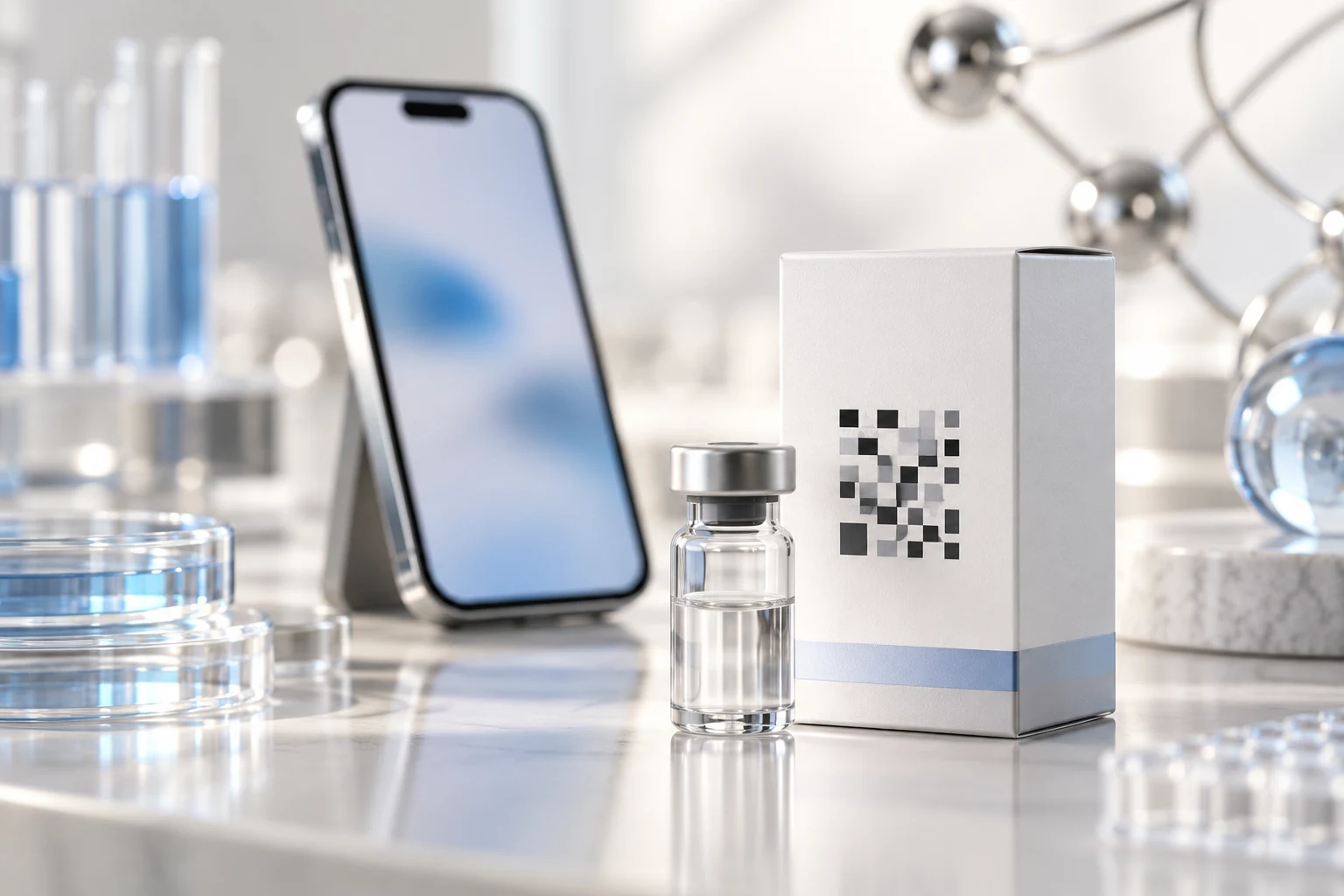
A QR code can make research peptide documentation easier to reach, but it does not establish the accuracy or relevance of the document it opens. The destination needs to identify the material, explain which records are available, and remain usable when the website changes.
A QR code can make research peptide documentation easier to reach, but it does not establish the accuracy or relevance of the document it opens. The destination needs to identify the material, explain which records are available, and remain usable when the website changes.
Think of the code as an access route. The document system behind it determines whether a researcher can retrieve the correct record and understand its relationship to the physical material.
Choose a stable destination
Linking directly to a temporary file location can create problems when the file is renamed or replaced. A stable landing page under a controlled domain can preserve the entry point while presenting the appropriate documents and their context.
Assign responsibility for maintaining that destination. Include it in website migration checks and broken-link monitoring. A printed code may remain in circulation long after the original web design has changed.
GS1 Digital Link provides a standards-based approach for connecting identifiers to digital resources. An ordinary QR link and a GS1 Digital Link implementation are different choices; use the standard's requirements if the latter is selected.
Make the material context explicit
The destination should show enough information for the reader to check that it matches the intended item. A product-level page may need a separate selection or lookup for shipment-specific documents. Avoid opening a report for a different shipment simply because it is the newest file available.
Where a document does not exist or has not been published, say so clearly and provide the appropriate request route. Do not fill an empty state with an unrelated example report that could be mistaken for the requested evidence.
The site's COA reading guide addresses document interpretation. The QR destination should preserve the identifiers needed to perform that review.
Keep document versions understandable
If a report is corrected, identify the new version and explain how it relates to the earlier record. Preserve historical access according to the organization's document policy rather than silently changing the contents behind an unchanged filename.
A document's issue date, revision status, and material association should be visible in the record. These fields help the reader distinguish a newer report from a report about newer material.
For a hypothetical example, an updated product page could offer a general specification sheet alongside several shipment reports. Clear labels prevent a reader from treating the general sheet as the analytical record for a specific shipment.
Test the experience from the printed label
Test a finished label with the devices and conditions the audience is likely to use. Check that the destination is readable on a small screen and that downloadable files open without requiring unexpected account access.
Test missing and outdated records as well as successful ones. The failure state should tell the reader which identifier to provide when requesting help. A blank page or generic error leaves the laboratory without a useful next step.
Keep confidential order details out of public document destinations. The access design should expose the intended research documentation without disclosing unrelated customer information.
Maintain the link as part of the service
Assign an owner for link monitoring, document updates, and reported mismatches. Include the QR route in change reviews when the website or document platform moves. Retest printed samples after material changes to the label design.
For questions about records associated with a purchase, start with the COA directory or contact Peptide Wholesale Supply. Any custom QR or document-hosting arrangement should be confirmed separately. A usable access route helps researchers review evidence; it does not substitute for that evidence.
Continue reading
Explore related research guides: Connecting a Research Peptide Store to a 3PL; Barcode Checks for Research Peptide Fulfillment.
All product-related workflows discussed here are for in vitro laboratory research materials only. Not for human or animal use or consumption. Not for diagnostic or therapeutic use.