Structural Methods4 min read
HDX-MS in Peptide Interaction Research: Reading Protection Changes
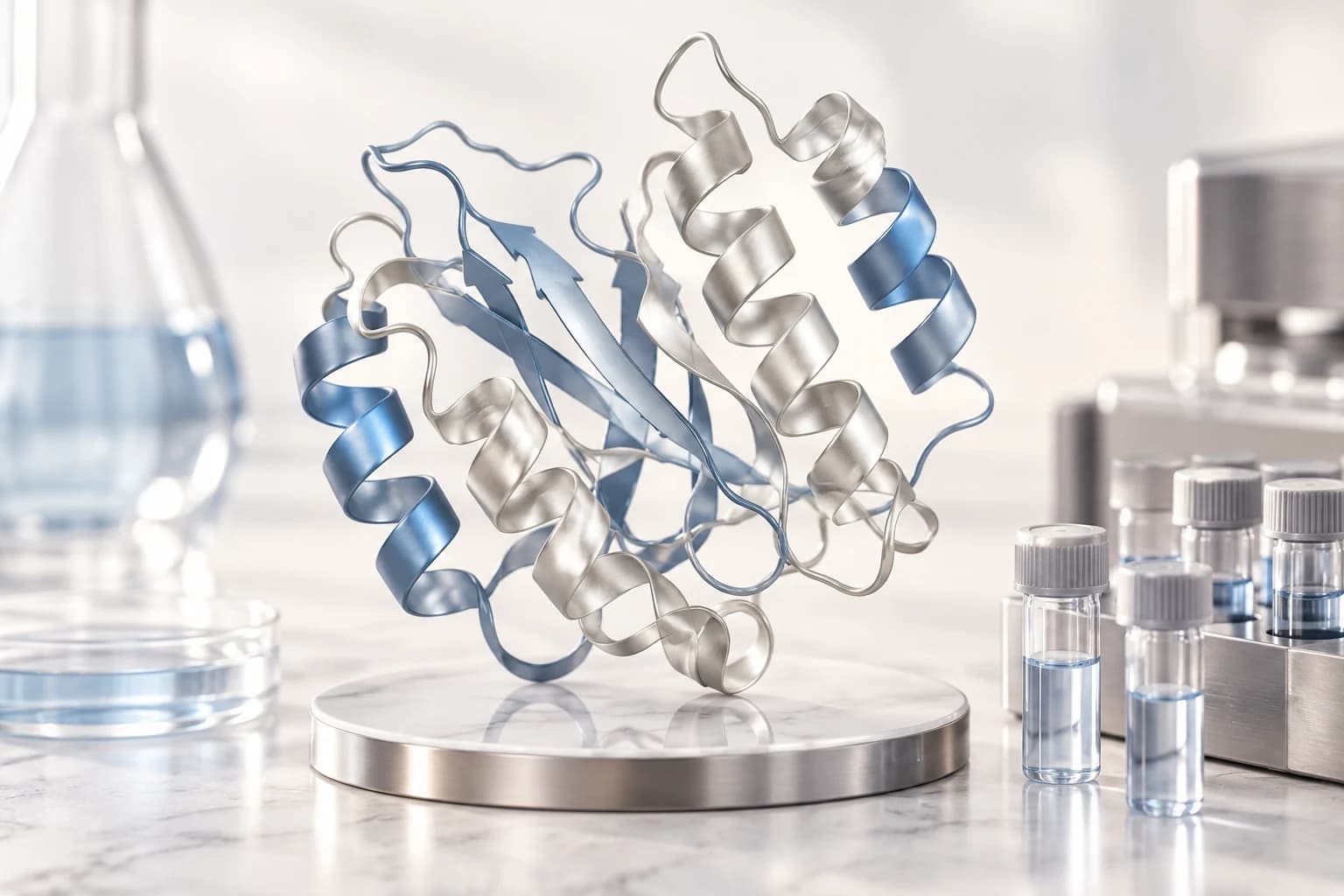
Hydrogen-deuterium exchange mass spectrometry can investigate changes in a protein's exchange behavior when a peptide interaction is studied. A difference map may highlight regions worth examining, but it does not automatically identify a direct contact or establish a complete binding mechanism.
Hydrogen-deuterium exchange mass spectrometry can investigate changes in a protein's exchange behavior when a peptide interaction is studied. A difference map may highlight regions worth examining, but it does not automatically identify a direct contact or establish a complete binding mechanism.
The central interpretation task is to connect the observed change with the experimental comparison. Which regions were measured, under which conditions, and what explanations remain compatible with the data?
Understand the comparison being measured
HDX-MS follows hydrogen-deuterium exchange and uses mass spectrometry to evaluate uptake. In common protein-level workflows, digestion and analysis provide regional information through measured peptide fragments.
The community's HDX-MS reporting recommendations describe important acquisition, analysis, and reporting considerations. These include the information needed to understand coverage, replicate measurements, and the experimental conditions behind an exchange result.
When a peptide is the test ligand, distinguish it clearly from the peptide fragments generated to measure the protein. Using the word “peptide” for both without qualification can make a report difficult to follow.
Read coverage before reading color
A colored structural map can make an experiment look more complete than its measured coverage. Identify the regions for which exchange information was actually obtained, including gaps and overlapping fragments.
Do not interpret an unmeasured region as unchanged. Likewise, a broad fragment-level observation should not be presented as a single-residue assignment unless the method provides that resolution.
For a hypothetical target, a region without usable fragments might include the proposed binding site. The absence of a displayed change there would not rule out an interaction. The report should identify that blind spot directly.
Consider protection and conformational explanations
A change in exchange can be consistent with altered accessibility or structural dynamics. The interpretation may involve direct interaction, a conformational change elsewhere, or a mixture of effects that requires further investigation.
An original HDX-MS study of transporter conformational dynamics demonstrates that different bound states can produce distinct structural responses. That example supports the need for interpretation beyond a simple contact map; it does not establish the behavior of an unrelated peptide-target pair.
Keep the measured difference separate from the proposed mechanism. State which additional observation would help discriminate among the plausible explanations.
Check the comparison conditions
The unbound and comparison samples should be understood in terms of composition, preparation, exchange timing, and processing. A change in the sample environment may complicate attribution of the difference solely to binding.
Retain the actual experimental conditions with every comparison rather than labeling files only “control” and “treated.” Include how the test peptide was represented and how its presence was accounted for in the analysis.
The material specification guide helps define the intended ligand. The HDX record must then document the actual material and conditions used in the structural experiment.
Report an exchange result that can be reviewed
Provide the measured regions, time points, replicate structure, data-processing method, and uncertainty criteria used to identify differences. Retain the underlying uptake data with the structural visualization.
For a hypothetical result, a useful conclusion would identify a reproducible regional change and explain whether direct contact or a broader conformational response remains unresolved. The next experiment can then be chosen to address that uncertainty specifically.
For purchasing or documentation questions, contact Peptide Wholesale Supply about the exact item. HDX-MS is discussed as a research method and is not implied to be part of routine product testing or an available supplier service.
Related reading
Continue with Circular Dichroism for Peptide Secondary Structure: Reading the Spectrum; Reading Peptide NMR Structures: Assignments, Restraints, and Ensembles; SPR for Peptide Binding Kinetics: How to Review a Sensorgram.
For in vitro laboratory research use only. Not for human or animal use or consumption. Not for diagnostic or therapeutic use.