Research Literacy4 min read
Biological and Technical Replicates in Peptide Experiments
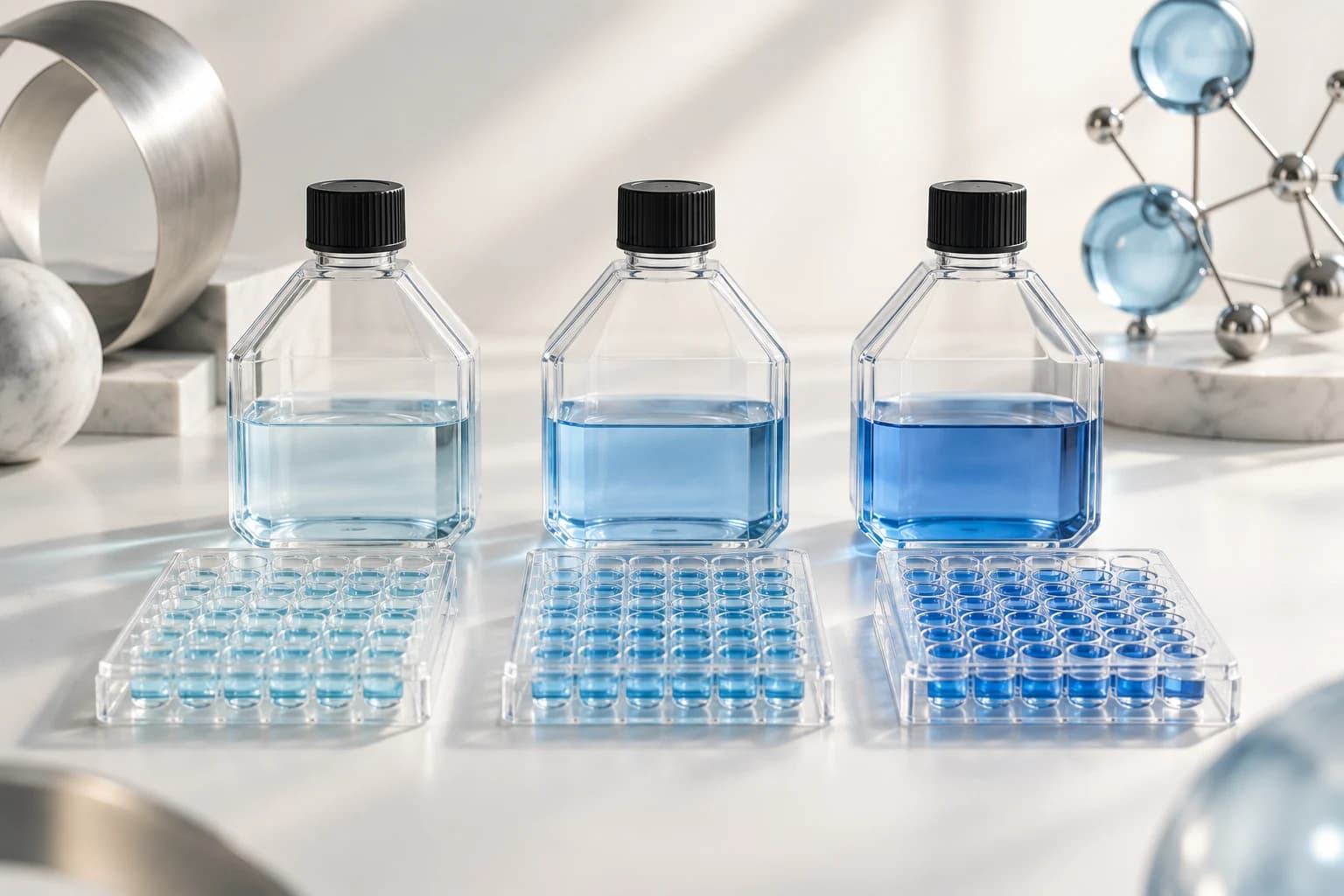
Biological and technical replicates help a laboratory understand different sources of variation. Repeated wells from one preparation can reveal measurement variability, while independently generated experimental material may address a broader reproducibility question. Counting both as the same kind of evidence can overstate the support for a result.
Biological and technical replicates help a laboratory understand different sources of variation. Repeated wells from one preparation can reveal measurement variability, while independently generated experimental material may address a broader reproducibility question. Counting both as the same kind of evidence can overstate the support for a result.
The first planning question is the experimental unit: what receives the independently assigned condition in the study? The answer determines how observations should be grouped and which sample count supports the intended inference.
Define the unit before counting measurements
A plate can contain many observations without containing that many independent experiments. The relationship among cells, preparations, wells, plates, and days depends on the design.
The methodological paper What exactly is N in cell culture and animal experiments distinguishes biological, experimental, and observational units. Its framework is useful for in vitro peptide studies because it directs attention to independence and treatment assignment rather than labels alone.
Write the unit definition into the study plan. Calling every well a biological replicate does not make the wells independent for the question being tested.
Map the hierarchy of the actual experiment
Consider a hypothetical project with three independently prepared cell-culture experiments, each containing four repeated wells per condition. The dataset contains twelve well measurements per condition, but that does not automatically justify reporting twelve independent experiments.
The analysis must account for which wells share a preparation and other conditions. The appropriate model depends on the design, including whether treatments were independently assigned within each preparation and what population the conclusion concerns.
Record identifiers for the culture, preparation, plate, well, treatment, and run. This hierarchy allows a reviewer or statistician to reconstruct the experiment without relying on a single ambiguous n column.
Use technical replication for the question it answers
Technical repeats can help identify inconsistent dispensing, detection noise, or unstable measurements. They are valuable, but increasing their number does not necessarily address variation across independently prepared experiments.
If all repeated wells agree within one run and different runs disagree, adding more wells to the original run may provide little information about the source of that disagreement. Investigating preparation or run-level factors would be more directly relevant.
Allocate replication around the uncertainty that matters to the study. Sample-size planning should follow the intended effect estimate, variability, and analysis rather than a universal number of wells.
Decide how repeats enter the analysis
Specify whether technical measurements will be summarized within a unit or represented through an appropriate hierarchical model. Decide how missing observations and failed controls will be handled. Keep these rules separate from the observed treatment pattern.
Report the number of independent experiments and the technical measurements within them. State what error bars represent. Standard deviation, standard error, and confidence intervals communicate different information and should be labeled accurately.
Preserve individual results where feasible. A plot showing only one average can conceal whether variation arises within a run or between runs.
Connect material planning to independent experiments
Once the design is clear, plan enough material for the intended independent preparations, relevant controls, and justified repeats. Keep the plan responsive to the actual experiment rather than increasing order size merely to fill more wells.
The site's evaluation-order guide can help translate a defined study into a purchasing request. For available product options and documentation, contact Peptide Wholesale Supply. A well-defined replication plan makes that request more precise and makes the resulting data easier to interpret.
Continue reading
Explore related research guides: Microplate Edge Effects in Peptide Assays; Comparing Research Peptide Materials in an Established Assay.
For in vitro laboratory research use only. Not for human or animal use or consumption. Not for diagnostic or therapeutic use.