Research Business Operations3 min read
Wholesale Peptide Supply: Questions About Consignment Inventory
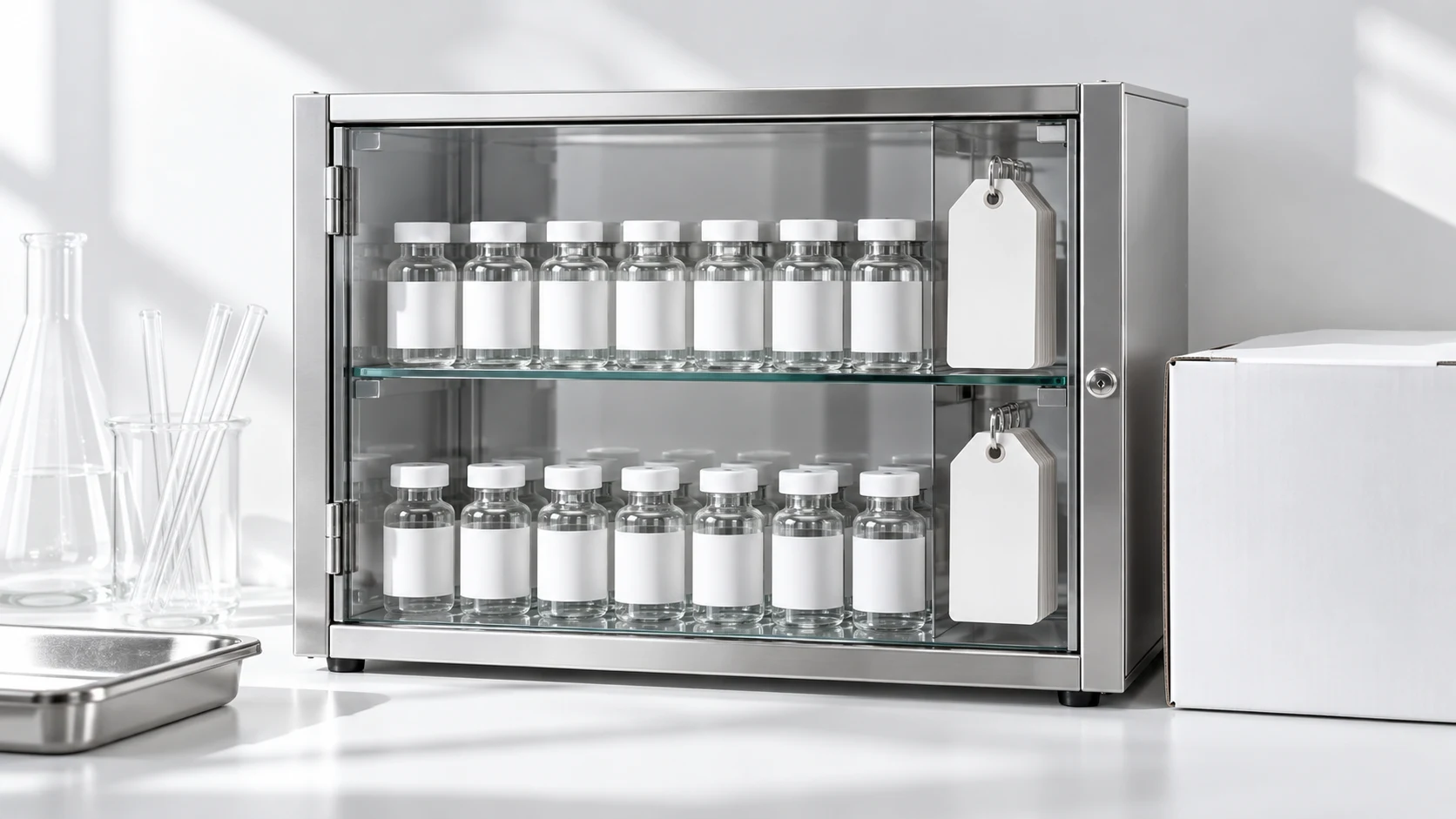
Evaluate a proposed research peptide consignment arrangement by separating ownership, permitted use, reconciliation, handling, and payment triggers.
Consignment inventory can place material at a buyer's location under an arrangement where ownership and payment depend on agreed conditions. For wholesale peptide supply, those conditions need to be explicit. Physically holding a vial does not necessarily mean the laboratory owns it or may use it.
This guide describes questions for evaluating a proposal. It does not state that Peptide Wholesale Supply offers consignment. All products discussed are for in vitro laboratory research and not for human or veterinary use.
Establish the ownership boundary
Ask who owns the material on arrival, which event changes ownership, and what constitutes an authorized withdrawal. Record whether payment is triggered by use, transfer, an agreed date, or another defined event.
Your organization should review the agreement under its purchasing and finance procedures. This resource does not supply contractual or accounting terms.
Review the operating responsibilities
| Responsibility | Question to settle |
|---|---|
| Inventory ownership | Who owns each unit at each stage? |
| Scientific acceptance | Who reviews suitability for the laboratory workflow? |
| Handling | Who maintains the required records and conditions? |
| Withdrawal | Who may authorize use or transfer? |
| Reconciliation | How are counts compared and differences investigated? |
| Payment | Which documented event triggers an invoice? |
| End of arrangement | What happens to remaining units? |
Commercial ownership does not replace scientific acceptance. Material still needs the appropriate review for the intended research workflow.
Keep categories separate in the inventory system
Show consigned units separately from purchased and accepted stock. If material is withdrawn under the agreement, record the date, quantity, authorization, and resulting ownership status. Avoid counting a unit as both supplier-owned inventory and available buyer-owned inventory.
The repeat-order inventory checklist provides ordinary purchasing categories. A consignment proposal needs additional ownership and withdrawal fields.
Test reconciliation with an example
Suppose a hypothetical arrangement starts with 30 recorded units and permits a withdrawal of 10. The reconciliation should show 20 remaining under the original ownership category and 10 moved according to the agreed trigger. The corresponding invoice should match the agreement, not simply the original delivered quantity.
Also define how damage, missing units, unresolved documentation, and unused balances are handled. Do not assume return rights or payment obligations that were never agreed.
Virginia Tech’s inventory consignment guidance for laboratories offers an institutional example of reviewing a supplier program. It does not establish this supplier’s available arrangements or terms.
For purchasing arrangements available from this supplier, contact Peptide Wholesale Supply. Build the laboratory's process around confirmed terms.